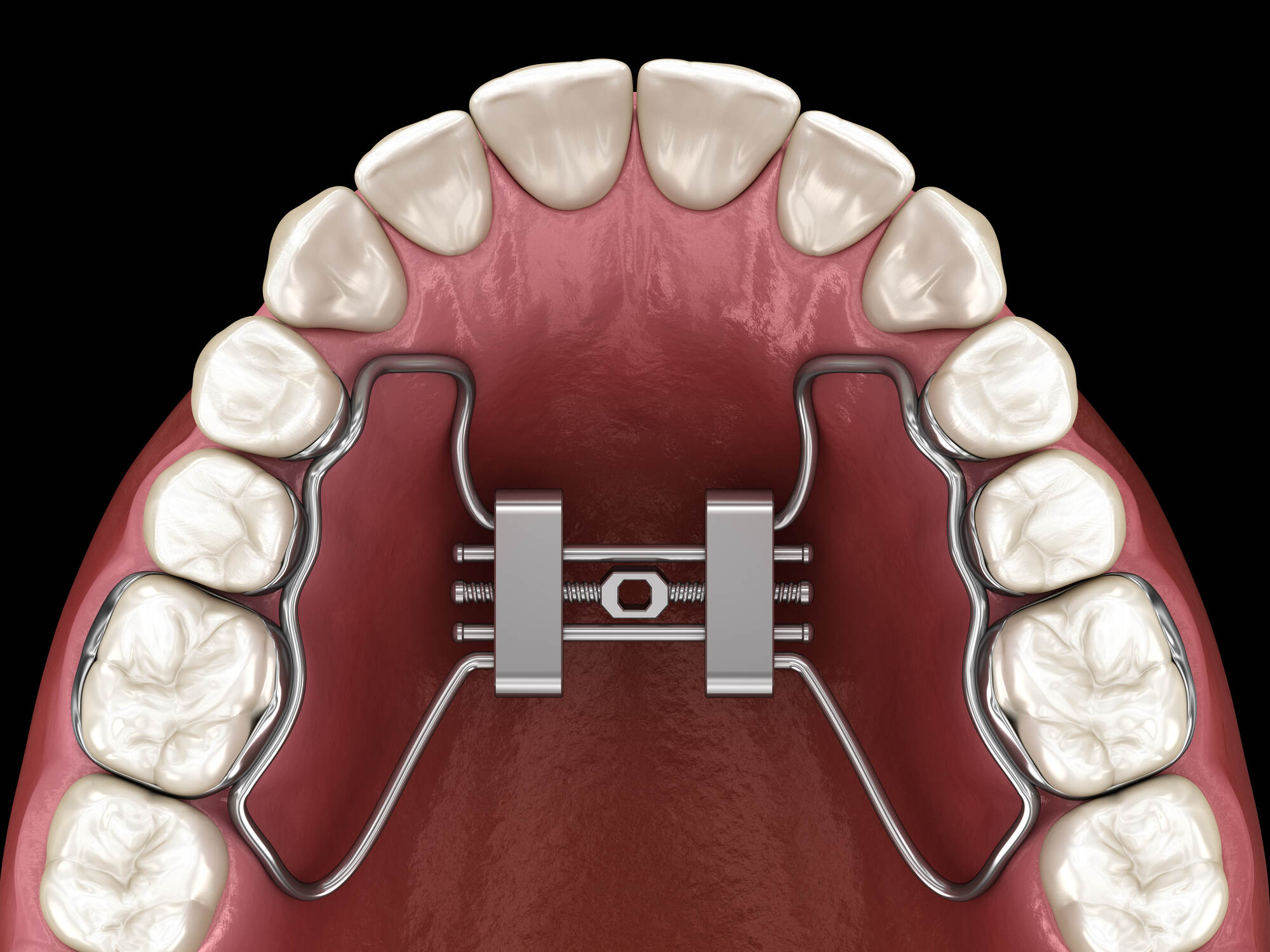
Yes, braces can expand your palate with the help of a palatal expander, a small appliance fixed to the upper back teeth that gradually widens the upper jaw. Regular braces then line up the teeth in the wider arch. On their own, standard braces and aligners can only widen the arch slightly by tilting the teeth outwards.
Palatal expansion works best in children and young teenagers, whose upper jaw is still growing, but there are options for adults too.
Bass Orthodontics are leading orthodontists in London under the supervision of American-trained Dr Anton Bass. For any further questions, please email us at reception@bassorthodontics.com or call us on 020 7580 8780.
Expanding the palate means widening the upper jaw so that it fits better with the lower jaw and has more room for the teeth.
The upper jaw is made of two halves that meet along a seam running down the middle of the roof of the mouth. In children, this seam has not fully fused, so it can be gently opened and new bone forms in the gap.
A narrow upper jaw can cause a crossbite, where the upper back teeth sit inside the lower teeth, as well as crowding.
A palatal expander works by pushing the two halves of the upper jaw apart a fraction of a millimetre at a time.
The expander is fixed to the upper back teeth and has a small screw in the middle. The screw is turned with a key, usually once a day for a few weeks, until the jaw reaches the right width.
A gap often appears between the upper front teeth during expansion. This is a normal sign that it is working, and it closes naturally or with braces afterwards.
No, braces cannot truly expand the palate on their own, because they move the teeth rather than the jaw bone.
Braces and aligners can widen the dental arch a little by tilting the back teeth outwards. This can help with mild crowding, but it does not widen the upper jaw itself, so it is not suitable for a genuinely narrow jaw or a large crossbite.
That is why expansion is often the first stage of treatment, followed by fixed or removable braces to align the teeth.
Palatal expansion is usually needed by people whose upper jaw is too narrow for the lower jaw.
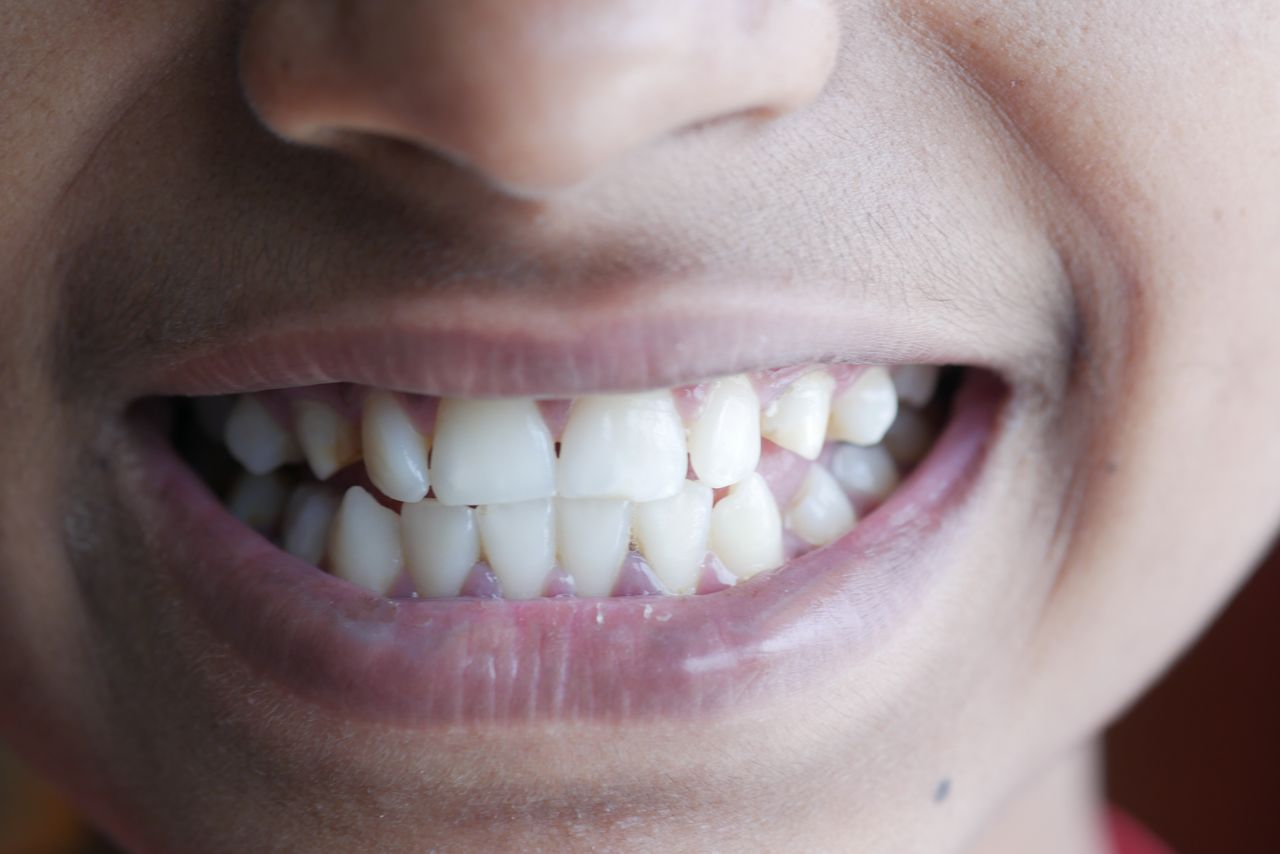
Signs include a crossbite at the back, crowding in the upper teeth, or a smile with dark spaces at the corners. A narrow upper jaw is fairly common, and research suggests it affects around 8% of adolescents and 10% of adults.
Your orthodontist will look at your bite and jaw width to decide whether expansion is needed.
The best age for palatal expansion is usually during childhood or the early teenage years, before the seam in the upper jaw fuses.
At this stage, expansion is quicker, more comfortable and more stable. This is one reason we recommend an early orthodontic assessment if you notice a crossbite or crowding in your child's teeth. For growing children, orthopaedic braces and appliances can help guide jaw development at the right time.
Yes, adults can have their palate expanded, but it usually needs extra support because the jaw has stopped growing.
One option is miniscrew-assisted rapid palatal expansion, or MARPE, where the expander is anchored to tiny screws in the roof of the mouth. A review published in the European Journal of Orthodontics found that MARPE had an average success rate of 92.5% in late adolescents and adults.
Where this is not suitable, expansion can be combined with a minor surgical procedure. Your orthodontist will explain which approach fits your case.
Palatal expansion does not usually hurt, but you may feel pressure in your teeth, nose or cheeks for a short time after each turn.
Speech and eating can feel strange for the first few days while your tongue adjusts. Soft foods and simple pain relief help during this period, and most people settle quickly.
After palatal expansion, the expander normally stays in place for a few months so new bone can fill the widened seam.
Once the jaw is stable, braces or aligners are used to line up the teeth and close any gaps. A retainer is then worn to hold the result. Book a free e-consultation to find out whether expansion could help you or your child.
For more information, call 020 7580 8780 or email us at reception@bassorthodontics.com