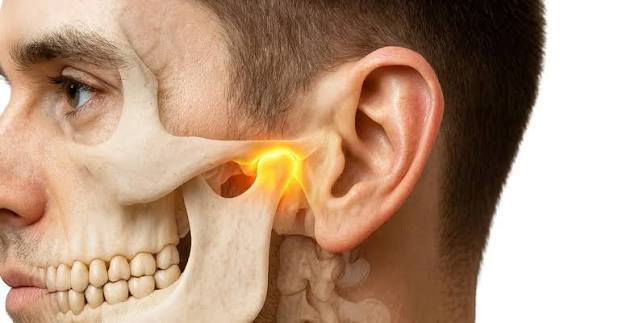
TMJ stands for temporomandibular joint, the pair of joints that connect your lower jaw to your skull. These joints allow you to open and close your mouth and move your jaw when you chew, speak and yawn.
When people say they “have TMJ”, they often mean temporomandibular joint disorder (TMD), a group of conditions that can cause pain, stiffness, clicking or difficulty moving the jaw.
Bass Orthodontics have TMJ specialists based in London, with our practice running for over 50 years. For more information, call us on 020 7580 8780.
The temporomandibular joints are located on either side of your face, just in front of your ears. They work with muscles and ligaments to control the movement of your jaw.
Unlike many other joints in the body, the TMJ can move in several directions. Your jaw can move up and down, from side to side, and forwards and backwards.
This flexibility is important for everyday activities. Every time you eat, talk, laugh or yawn, your TMJ is working.
TMJ disorder, more accurately called temporomandibular disorder (TMD), occurs when the jaw joint, surrounding muscles or nearby structures are not working properly.
There is not always one clear cause. TMD can develop because of several factors, including jaw injury, arthritis, teeth grinding or clenching, stress and problems affecting the way the jaw moves.
Research suggests that around 5% to 12% of adults experience TMD symptoms, although estimates vary depending on how the condition is defined and measured.
TMD is also more common in women than men. Some studies suggest that women are around twice as likely to experience clinically significant TMD symptoms.
TMJ problems can cause a range of symptoms. Some people have mild discomfort, while others may experience persistent pain that affects everyday activities.
Common symptoms include:
A clicking or popping sound does not always mean that there is a serious problem. Some people have jaw sounds without experiencing pain or restricted movement.
However, if clicking is accompanied by pain, swelling, locking or difficulty moving the jaw, it is worth speaking to a dentist or healthcare professional.
There are several possible causes of TMD:
An injury to the jaw or face can affect the joint, while conditions such as arthritis can cause inflammation and changes within the joint.
Teeth grinding and jaw clenching may also place additional pressure on the TMJ and the muscles around it. This can sometimes happen during sleep without a person realising they are doing it.
Stress may play a role too. When people are stressed or anxious, they may unconsciously clench their jaw or tighten their facial muscles. Over time, this can contribute to discomfort.
In some cases, there may be several contributing factors rather than one single cause.
A dentist or healthcare professional will usually ask about your symptoms and examine your jaw.
They may check how far you can open your mouth, listen for joint sounds and feel the jaw muscles and joints for tenderness.
Your teeth may also be examined for signs of grinding or clenching.
Sometimes, further tests are needed. Depending on your symptoms, these may include an X-ray, MRI or CT scan to provide a closer look at the jaw joint and surrounding structures.
Many people with mild TMD symptoms improve with simple, non-invasive measures.
These can include eating softer foods for a short period, avoiding excessive chewing, applying a warm or cold compress and trying to reduce jaw clenching.
A dentist may also recommend exercises, physiotherapy or a mouthguard in certain situations. Medication may sometimes be used to manage pain or inflammation.
More complex treatments may be considered when symptoms are severe or do not improve with simpler approaches. The right treatment should be based on an individual assessment rather than a one-size-fits-all approach.
You should consider speaking to a dentist if jaw pain continues, becomes worse or starts affecting your ability to eat, speak or open your mouth.
It is particularly important to seek professional advice if your jaw locks, you have significant swelling, or your symptoms develop following an injury.
Getting the cause assessed can help ensure that you receive appropriate treatment and avoid unnecessary procedures.
Orthodontists can help assess whether the position of your teeth and bite may be contributing to jaw discomfort or TMD symptoms. They may examine how your upper and lower teeth come together, look for signs of uneven wear and assess how your jaw moves.
If orthodontic treatment is appropriate, options such as braces or clear aligners (see invisible braces) may be considered to improve the alignment of the teeth and bite.
However, orthodontic treatment is not a guaranteed treatment for TMD, so a thorough assessment is important before starting any treatment. An orthodontist may also work alongside a dentist or other healthcare professional when symptoms require a wider approach.
See also: How orthodontists can help with jaw pain
The TMJ is a small but important part of your body, helping your jaw perform hundreds of movements every day. While occasional clicking may not be a cause for concern, ongoing pain, stiffness or restricted jaw movement should not be ignored.
If you are experiencing symptoms that could be linked to TMD, a dentist or healthcare professional can assess your jaw, identify possible causes and recommend the most appropriate next steps.