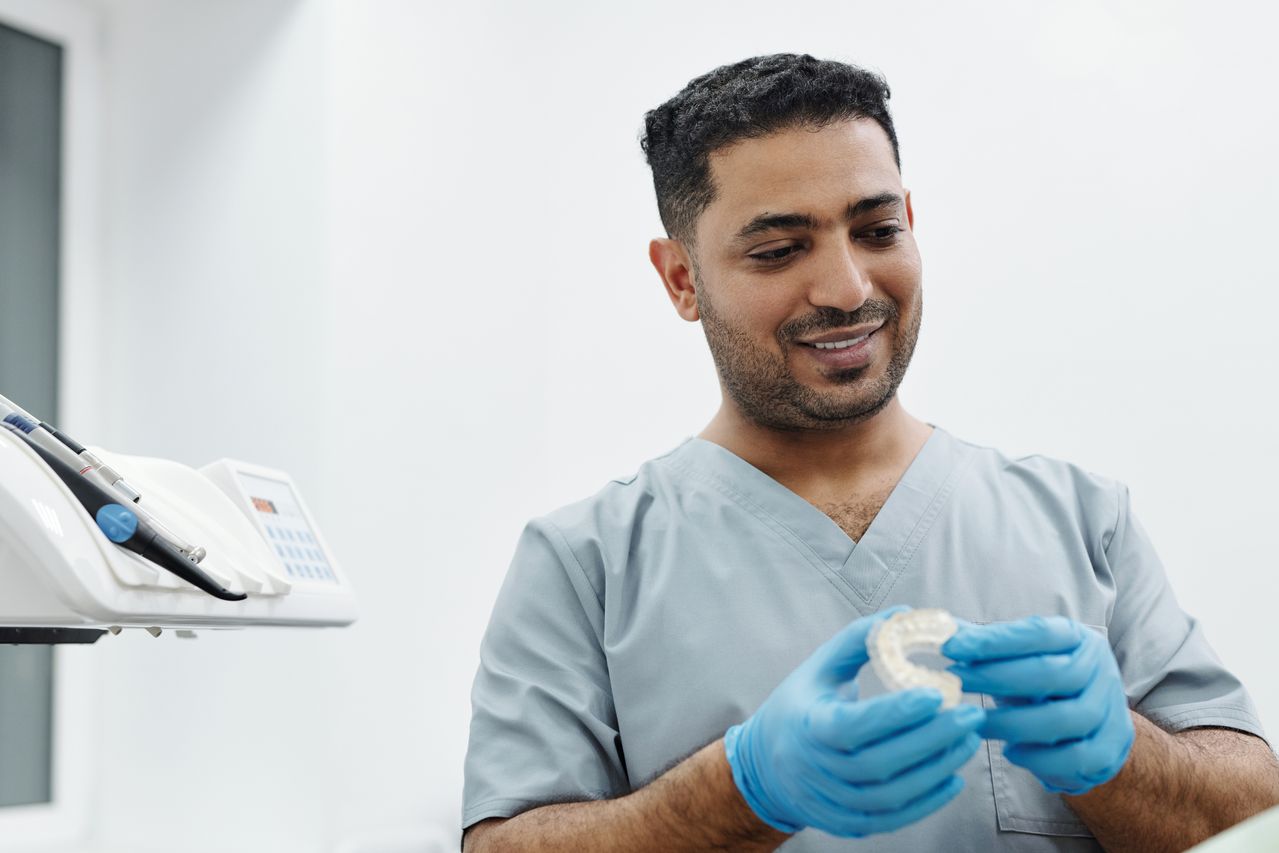

Orthodontics may help with jaw pain in some cases, particularly when tooth alignment or the way the teeth meet is contributing to problems with the bite.
However, jaw pain can have many different causes, including problems with the temporomandibular joint (TMJ), teeth grinding, muscle tension, arthritis or injury.
An orthodontist can assess your teeth and bite to determine whether orthodontic treatment may be appropriate, but jaw pain should not automatically be assumed to be caused by an uneven bite.
Bass Orthodontics have TMJ specialists based in Harley Street, with our practice running for over 50 years. For more information, call us on 020 7580 8780.
There are many possible causes of jaw pain, so it is important to identify the underlying problem before deciding on treatment.
Jaw and temporomandibular disorders are relatively common. Research estimates that around 5% to 12% of adults experience symptoms of temporomandibular disorders, although reported rates vary depending on the definition and population studied.
Symptoms can range from mild discomfort to persistent pain affecting eating, speaking or opening the mouth.
Not everyone with a clicking or popping jaw will experience pain. Similarly, having an unusual bite does not necessarily mean that it will cause jaw problems.
Yes, orthodontists can help with jaw pain. Orthodontics focuses on the alignment of the teeth and the relationship between the upper and lower jaws. In some cases, improving the position of the teeth may help create a more functional bite.
However, orthodontic treatment should not be considered a universal treatment for jaw pain or TMJ disorders. Research has not established that orthodontic treatment can reliably prevent or cure temporomandibular disorders.
If your jaw pain is caused by another problem, such as teeth grinding or inflammation of the jaw joint, orthodontic treatment may not address the underlying cause.
An orthodontist can therefore assess your bite and determine whether there is an orthodontic issue that needs attention.
During an orthodontic assessment, the orthodontist will look at how your upper and lower teeth meet and how your jaw moves.
They may assess problems such as an overbite and underbite, crossbite, crowding or other bite irregularities. They can also look for signs of tooth wear that may indicate grinding or clenching.
Depending on your symptoms, they may recommend further assessment by your dentist, a GP or another healthcare professional.
If your bite does require orthodontic treatment, options may include fixed braces, clear aligners or other orthodontic appliances.
The goal is to improve the alignment and function of the teeth rather than simply treating jaw pain itself.
For some people, simple measures may help with jaw pain such as eating softer foods temporarily, avoiding excessive chewing, applying heat or cold and becoming more aware of jaw clenching.
A dentist or healthcare professional may also recommend exercises, physiotherapy or medication where appropriate.
If teeth grinding is contributing to the problem, your dentist may discuss ways to manage it such as wearing mouthguards, retainers or michigan splints whilst you sleep. More complex cases may require assessment by a TMJ specialist.
Orthodontic treatment may be considered when there is a genuine orthodontic problem that would benefit from correcting the position of the teeth or bite.
Yes, jaw pain can be assessed and treated through NHS services, but the route and availability of treatment depend on the cause and your circumstances.
If you have ongoing jaw pain, you can generally start by speaking to your dentist. They can assess your teeth, jaw and symptoms and advise whether further treatment or referral is needed.
If the problem is related to your general health rather than your teeth, you may need to speak to your GP.
NHS orthodontic treatment is more restricted than orthodontic treatment provided privately. For children and young people, NHS orthodontic treatment is generally available when there is a clear clinical need and the patient meets the relevant criteria.
For adults, NHS orthodontic treatment is not routinely available and is generally limited to more complex cases requiring multidisciplinary care.
It is therefore important to distinguish between receiving an NHS assessment for jaw pain and receiving NHS orthodontic treatment.
Some dental or health insurance policies may cover certain treatments for jaw pain, but this depends entirely on the individual policy.
Coverage can vary depending on whether the treatment is provided by a dentist, orthodontist, physiotherapist or specialist. Some policies may also have exclusions for pre-existing conditions or treatments considered cosmetic.
Orthodontic treatment may have separate limits or exclusions from general dental treatment. Some policies may cover orthodontics only for children or may provide a fixed contribution towards treatment.
Before starting treatment, check your policy documents or contact your insurer to confirm what is covered, whether you need a referral and whether pre-authorisation is required.
Your dentist or orthodontist may also be able to provide a treatment plan and estimated costs that you can submit to your insurer.
You should consider seeking professional advice if jaw pain persists, becomes worse or affects your ability to eat, speak or open your mouth.
You should also seek assessment if your jaw locks, you experience significant swelling or the pain develops following an injury.
A dentist can help identify whether the problem is dental, muscular or related to the jaw joint and can recommend the appropriate next step.
Orthodontics can play a role in managing some bite-related problems, but it is not a universal solution for jaw pain. The cause of the pain needs to be established before deciding whether orthodontic treatment is appropriate.
If you are experiencing persistent jaw pain, start with a dental or healthcare assessment. An orthodontist can then determine whether your bite or tooth alignment is contributing to the problem and explain whether orthodontic treatment could be beneficial.