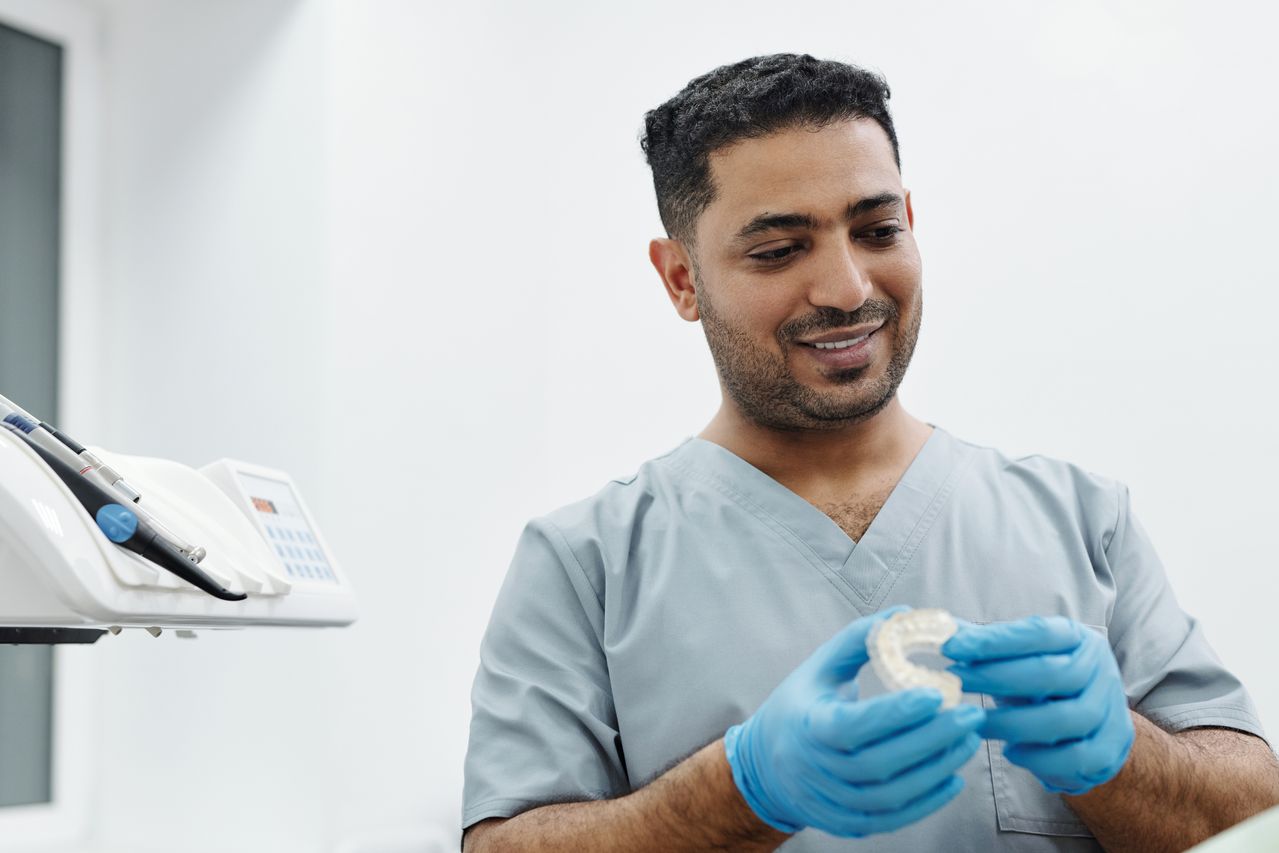
If you do not wear your retainer after braces, your teeth can gradually move back towards their original positions. This process is known as orthodontic relapse and it is very common when retainers are not worn as advised.
After braces are removed, the bone and tissues around the teeth need time to stabilise in their new positions. Without the support of a retainer, the teeth may begin to shift within weeks or months.
Research suggests that around 50% of orthodontic patients experience some level of relapse if retainers are not used properly. In some cases, the changes may be minor, but in others the teeth can become noticeably crooked again.
Bass Orthodontics offers a range of treatments to achieve a beautiful, straight smile, including invisible aligner braces. For more information, call us on 020 7580 8780.
Retainers are usually worn immediately after braces and most orthodontists recommend wearing retainers full time for the first few months after treatment. This typically means wearing them for around 20 to 22 hours per day, removing them only when eating, drinking or brushing your teeth.
After this initial stage, patients are usually advised to wear their retainers at night only. The exact length of time varies depending on the individual case, but many orthodontists recommend nighttime retainer use for several years. Some experts suggest that patients should wear a retainer at night indefinitely to maintain straight teeth.
This may sound like a long commitment, but wearing a retainer at night is generally simple and comfortable. Whilst orthodontic treatment is usually permanent, the risk of not wearing a retainer means that your teeth can move back. It is far easier to wear a retainer than having orthodontic treatment again if teeth move back out of position.
In many cases, there is no strict point where patients completely stop wearing their retainers. Teeth naturally shift throughout life due to aging, jaw changes and everyday habits such as chewing and grinding. Hence, orthodontists often recommend ongoing retainer use at night.
For some people, the frequency of wearing a retainer may gradually reduce over time. After several years of stable results, patients may be able to wear their retainer less often. However, stopping completely can increase the risk of teeth moving again.
Studies have shown that teeth can continue to shift even decades after orthodontic treatment. In fact, mild crowding in the lower front teeth is very common in adulthood. Continuing to wear a retainer at night is one of the most effective ways to prevent this.
Wearing a retainer for a long time is generally not harmful. In fact, many orthodontists encourage patients to continue wearing their retainers at night for life to maintain the results of their treatment.
The main issue that can occur with long-term retainer use is wear and tear on the appliance itself. Retainers can become loose, cracked or worn over time, especially if they are used regularly for many years. This means they may need to be replaced occasionally to ensure they continue to fit properly.
Good hygiene is also important when wearing retainers long term. Retainers should be cleaned regularly to prevent the build-up of bacteria. When they are properly maintained and replaced when necessary, long-term retainer use is safe and beneficial.
Yes, most patients will have a few follow-up appointments with their orthodontist after their braces are removed. These visits allow the orthodontist to check that the retainers fit properly and that the teeth remain stable in their new positions.
Over time, appointments usually become less frequent. In many cases, once the orthodontist is confident that the teeth are stable, patients simply return to their regular dentist for routine dental check-ups.
However, if a retainer becomes damaged or stops fitting properly, it is important to see an orthodontist again. A poorly fitting retainer may not hold the teeth in the correct position, which can allow them to move.
Maintaining regular dental check-ups is still important after orthodontic treatment. Dentists can monitor the health of the teeth and gums and identify any changes that may affect alignment.
Although braces are highly effective, it is possible that some people may need orthodontic treatment again later in life. This is most likely to happen if retainers are not worn as recommended or if teeth gradually shift over many years.
Small changes in tooth alignment are quite common as people get older. In some cases, adults choose to have orthodontic treatment again to improve the appearance or function of their teeth. Modern options such as clear aligners or short-term braces can often correct mild issues relatively quickly.
Statistics suggest that around 20–25% of orthodontic patients today are adults. Many of these individuals previously had braces when they were younger but experienced some movement in their teeth later on.
The good news is that wearing retainers regularly can significantly reduce the chances of needing braces again. Retainers help maintain the results of orthodontic treatment and protect the time and effort invested in achieving straight teeth.
To keep your teeth straight long term, retainers play a crucial role. While braces move the teeth into the correct position, retainers keep them there while the surrounding bone and tissues stabilise.
If retainers are not worn, the teeth can slowly shift back towards their original positions. This can undo much of the progress made during orthodontic treatment. By wearing retainers as advised and attending regular dental check-ups, patients can help ensure their straight smile lasts for many years.
Bass Orthodontics is a leading orthodontist in London with more than 60 years of history. For more information, call us on 020 7580 8780.