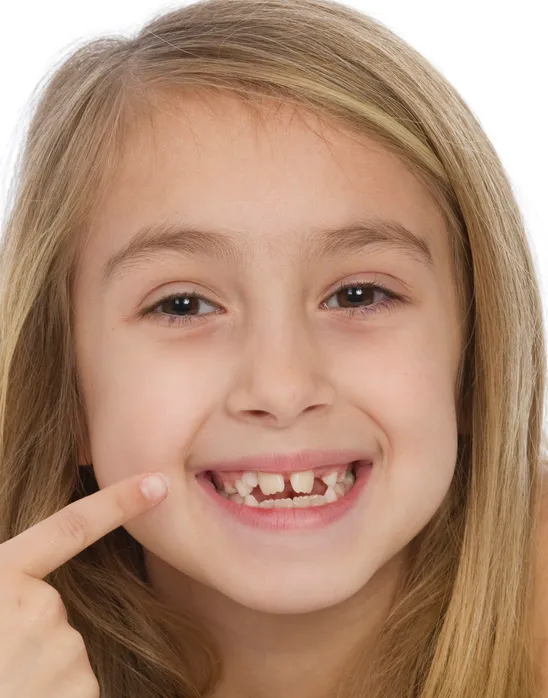
Occlusion describes the way your upper and lower teeth come together when you close your mouth.
Whether you have an overbite, underbite, crossbite, open bite, deep bite or other form of malocclusion, Dr Anton Bass is a Dental Occlusion Specialist who can assess your individual bite and discuss the best treatment options available.
We are based in Harley Street, London for over 50 years of practice.
For more information, call 020 7580 8780 or email us at reception@bassorthodontics.com


Occlusion is the relationship between your upper and lower teeth when they meet.
An ideal bite allows the teeth to come together in a functional and stable relationship. However, many people have some degree of malocclusion, where the teeth or jaws do not meet in the expected way.
Some bite differences are primarily aesthetic, while others can affect chewing, tooth wear, jaw function or the way your teeth fit together.
A specialist assessment helps determine whether treatment would be beneficial in your particular case.
The upper front teeth overlap the lower teeth vertically.
The upper front teeth sit further forward than the lower front teeth.
The lower teeth sit in front of the upper teeth when you bite together.
Some upper teeth sit inside the lower teeth rather than outside them.
Some teeth do not meet when the jaws are closed.
The upper front teeth overlap the lower front teeth excessively.
There is insufficient space for the teeth to align correctly within the dental arch.
There are noticeable gaps between some or several teeth.
The teeth may meet differently on one side compared with the other.
At Bass Orthodontics, we look beyond the appearance of individual teeth to understand how your teeth and jaws work together.
We discuss what concerns you about your bite, including any functional problems, discomfort or aesthetic concerns.
Your teeth, dental arches and jaw relationship are carefully examined.
We assess how your upper and lower teeth meet and look for features such as crowding, crossbite, overbite, underbite and open bite.
Where appropriate, modern digital scanning and diagnostic records can be used to create a detailed representation of your teeth.
This allows us to analyse your bite and plan treatment with greater precision.
If treatment is recommended, we create an individual treatment plan based on your particular bite, teeth and jaw development.
Depending on the problem, treatment may involve orthodontic braces, clear aligners or other orthodontic approaches.
Your bite is monitored throughout treatment to ensure that your teeth are moving according to the planned treatment.
A bite assessment can be particularly useful if you have:
Not every difference in occlusion requires treatment. The decision to treat should take into account your individual dental health, function, development and goals.
Orthodontics is not simply about creating straighter-looking teeth.
The position of individual teeth can influence how the upper and lower dental arches fit together. Orthodontic treatment can therefore be used to improve the relationship between the teeth as well as their appearance.
At Bass Orthodontics, treatment can include:
Our bespoke Clearline® aligner system uses digital 3D technology to plan individual tooth movements discreetly.
Our tooth-coloured ceramic braces provide the control of fixed orthodontic appliances while being less noticeable.
For growing children, orthopaedic braces and appliances can help guide jaw development and address certain bite problems at an appropriate stage of growth.
The right treatment depends on the individual diagnosis and complexity of the bite.
Bass Orthodontics is a family-run specialist orthodontic practice with more than five decades of experience treating children, teenagers and adults.
Our approach considers the relationship between teeth, dental arches and jaws rather than focusing solely on cosmetic alignment.
Every bite is different. Treatment is planned around your individual anatomy, clinical needs and goals.
Digital scanning and modern treatment-planning technology allow us to assess and plan orthodontic treatment with precision.
Orthodontic treatment can be appropriate at many different ages. For children, assessing jaw development at the right stage can also help address certain bite problems early.
Our practice is based at 4 Queen Anne Street, London, W1G 9LA, in the heart of Harley Street.
Occlusion describes the way your upper and lower teeth come together when you close your mouth.
There is variation between individuals, and there is not one identical bite that is appropriate for everyone. An orthodontic assessment looks at the relationship between your teeth and jaws and considers function as well as appearance.
Orthodontic treatment can correct many types of malocclusion, including overbites, underbites, crossbites, open bites, crowding and spacing. The appropriate treatment depends on the individual case.
Yes. Teeth can be moved at adult ages as well as during childhood. The appropriate treatment will depend on your teeth, gums, bone support, jaw relationship and overall dental health.
The relationship between occlusion and TMD is complex. Current evidence does not support the simple claim that a “bad bite” causes TMD. Jaw symptoms should therefore be assessed individually rather than assuming that changing the bite will resolve them.
Clear aligners can be effective for many orthodontic problems, but they are not suitable for every type or complexity of bite. During your consultation, we can assess whether an aligner-based approach is appropriate for you.
Children can benefit from an early orthodontic assessment , particularly where there are concerns about jaw development, crossbite, prominent teeth or significant crowding.
No. You can contact Bass Orthodontics directly to arrange an assessment.
Our specialist orthodontic practice is at 4 Queen Anne Street, London, W1G 9LA, in Harley Street.
We are based on Queen Anne Street next to Harley Street and are within walking distance of Baker Street and Marylebone , Bond Street, Tottenham Court Road, Soho and the West End .


